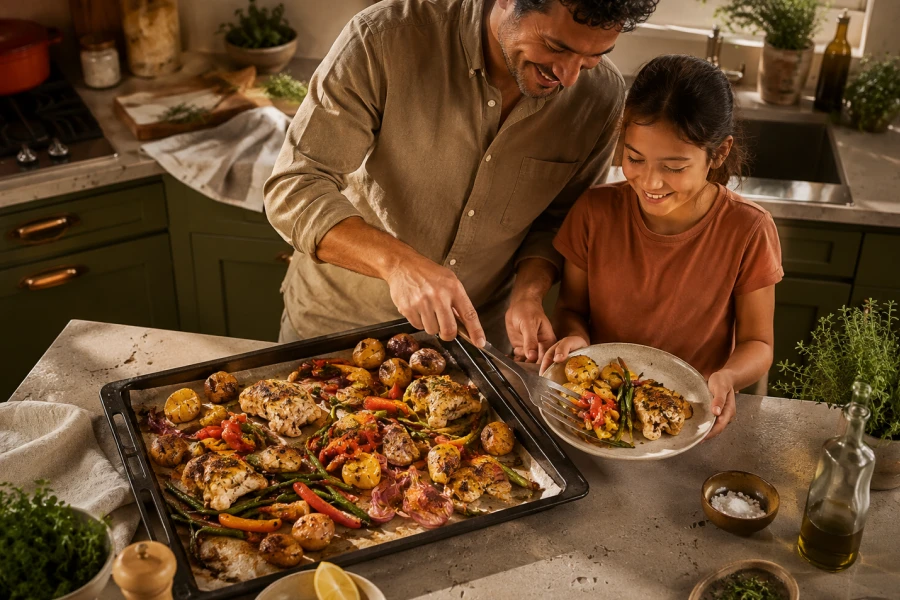
One pan dinner ideas can rescue busy weeks because they reduce the number of decisions between hunger and dinner. A single skillet, sheet pan, baking dish, or pot can carry the whole meal. That simplicity matters. It shortens prep. It limits cleanup. It makes leftovers easier to manage. It also keeps flavors connected. The best simple weeknight meals feel complete without asking you to juggle five burners at once.
Practical meals earn their place through repetition. They use available ingredients. They tolerate substitutions. They cook in a clear order. They finish without creating chaos. The format works because it is flexible. You can roast, simmer, bake, sauté, or braise. Each method creates a different mood. The structure stays familiar while the flavors change. That combination keeps weeknight cooking easier and more sustainable.
The pan determines the personality of the meal. Sheet pans create roasted edges. Skillets build fast flavor. Pots support soups, stews, rice, and pasta. Baking dishes work well for saucy comfort food. Choosing the right vessel prevents frustration. It also helps ingredients cook properly. A crowded sheet pan steams instead of browns. A shallow skillet reduces sauce faster. A deeper pot holds liquid better. The tool becomes part of the strategy.
Food waste often happens when ingredients sit without a plan. This approach solves that problem quickly. Half a pepper can join sausage and potatoes. Extra spinach can fold into pasta. Leftover rice can become a skillet bake. Roasted vegetables can become a warm bowl. Small amounts suddenly matter. This approach makes pantry-friendly dinners feel creative instead of desperate. It also helps grocery spending go further.
Repeatable formulas make dinner faster. Try protein, vegetable, starch, sauce, and finish. Another option is grain, beans, greens, spice, and acid. A third is pasta, broth, vegetable, cheese, and herbs. These patterns give structure without locking you into one recipe. They also make shopping easier. Once you know the formula, ingredients feel interchangeable. That keeps dinners interesting while reducing mental effort. Cooking becomes a rhythm instead of a nightly puzzle.
Cleanup affects whether people cook again tomorrow. A meal that tastes good but destroys the kitchen can feel discouraging. The format protects momentum. Use parchment when roasting. Soak sticky pans right away. Cook sauces in the same skillet used for browning. Serve directly from the pan when appropriate. Store leftovers in one container. These choices support low-cleanup dinner solutions and make weeknights feel less draining.
A weekly system can stay very simple. Choose two one-pan meals. Build one around pantry ingredients. Build another around fresh produce. Keep one flexible sauce ready. Save leftovers intentionally. Rotate cooking styles so meals do not feel identical. The system becomes powerful when it repeats with variation. They do not promise perfect evenings. They promise fewer obstacles between you and a warm, satisfying meal.
A good weekly rhythm can include variety without demanding constant novelty. Use one roasted dinner, one skillet dinner, and one saucy pot meal. That gives different textures during the week. It also prevents the same flavor profile from repeating too often. You can keep the structure while changing the mood. Monday may be tomato-rich. Wednesday may be creamy. Friday may be bright and herb-heavy. The week feels planned without becoming rigid.
Shopping becomes easier when you buy flexible anchors. Choose a protein that works in several meals. Pick vegetables that can roast, sauté, or fold into pasta. Keep one grain or starch ready. Add a sauce ingredient that can stretch across dishes. This kind of grocery planning reduces waste and supports improvisation. It also makes dinner feel less fragile. Even when plans change, you still have the pieces for a complete meal.
Seasonal changes can keep the system lively. Spring meals might lean on peas, herbs, and lemon. Summer can use tomatoes, corn, and zucchini. Autumn favors squash, mushrooms, and warm spices. Winter welcomes potatoes, cabbage, beans, and richer sauces. The cooking method stays familiar, but the plate changes with the market. That keeps weeknight meals from feeling repetitive. It also helps the same format stay appealing throughout the year.
Once that rhythm feels familiar, cooking becomes less reactive. You stop asking what is possible at the last minute. Instead, you already have a framework that turns ordinary ingredients into dinner with less friction.
With practice, that framework becomes a dependable shortcut for calmer shopping, faster prep, and warmer meals. It turns ordinary ingredients into dependable comfort quickly. That dependability is worth building into every week.



Leave a comment