
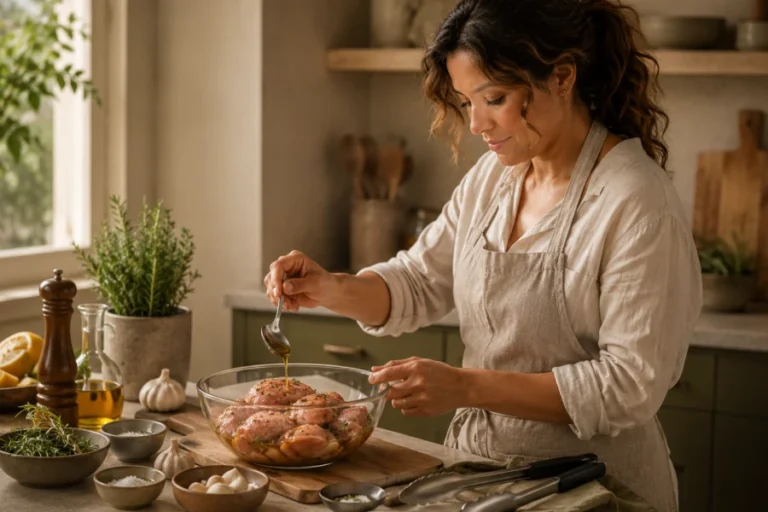
Marinating meat safely allows you to chase bold flavor without creating unnecessary kitchen risk. The process should feel confident, not cautious in a stressful way. Raw meat needs clean handling. Marinades need proper storage. Finished food needs fresh plates, tools, and sauces. Once those basics become routine, cooking feels more relaxed. You can focus on citrus, herbs, spices, garlic, smoke, and texture. A reliable safe marinating method helps flavor develop while keeping every step organized.
Separation is the foundation. Raw meat should stay away from ready-to-eat foods. Marinade tools should stay away from cooked food. Cutting boards need clear roles. Hands need frequent washing. The refrigerator needs enough space for sealed containers. These habits stop raw juices from traveling where they should not. They also make the kitchen feel more controlled. When separation becomes automatic, marinating feels simple. You protect the meal before heat ever touches it.
A marinade usually works through balance. Acid brightens. Oil carries flavor. Salt seasons. Aromatics add depth. Too much acid can toughen or soften texture awkwardly. Too little salt can leave meat flat. Strong aromatics need enough time to matter. The goal is not to overwhelm the cut. It is to support it. This balance improves flavor while keeping preparation manageable. It also helps you choose flavorful marinade recipes with better judgment.
The refrigerator should do the holding, not the counter. Meat should marinate cold. Containers should sit low enough to prevent leaks onto other food. Labels help when several items are prepared at once. Timing notes prevent forgotten bags from sitting too long. This approach depends on these quiet systems. They are not glamorous, but they work. A clean refrigerator setup gives you better control over time, temperature, and confidence.
Different cuts need different timing. Chicken breasts can over-marinate in acidic mixtures. Steak may handle stronger flavors. Pork often benefits from balanced sweetness and salt. Seafood needs very short contact. Small pieces absorb flavor faster than thick roasts. Bone-in cuts need more patience. Timing should serve texture as much as taste. When you understand the cut, you stop treating every protein the same. That makes results more consistent.
Outdoor cooking adds movement, heat, and distractions. That makes planning important. Carry raw meat in sealed containers. Keep it cold until cooking begins. Bring clean utensils for finished food. Avoid using raw marinade as a serving sauce. Check doneness properly. Serve on fresh platters. These steps support backyard cooking safety without reducing the fun. Guests notice great flavor, not the careful system behind it.
The goal is habit, not hesitation. Reserve sauce before adding meat. Keep raw items covered. Wash tools promptly. Discard used marinade safely. Cook with clean tongs after the first turn. Rest finished meat on a fresh plate. The routine becomes easier each time you repeat those steps. Eventually, the routine feels invisible. What remains is better flavor, smoother prep, and food you can serve with genuine confidence.
It also helps to match the marinade to the cooking method. Grilled food can handle bolder seasoning because smoke adds another layer. Pan-seared meat may need less sugar to avoid burning. Oven-roasted cuts benefit from flavors that deepen over steady heat. Smaller pieces need less time than larger ones. These choices keep texture and flavor aligned. They also make the cook feel more in control. Good technique starts with understanding what the heat will do next.
Another useful habit is writing down what worked. Note the cut, timing, salt level, and cooking method. Record whether the meat tasted balanced or too sharp. Mention whether the texture improved. This turns dinner into a simple learning loop. You do not need formal testing. You only need a few practical notes. The next meal becomes easier because you are not starting from memory alone. Consistency grows from those small records.
Family cooking benefits from simple communication as well. Tell someone which plate is for cooked food. Keep children away from raw prep areas. Mark reserved sauce clearly. Put used tools directly into the sink. These habits prevent confusion when the kitchen gets busy. They also make shared cooking safer and more enjoyable. A clean system lets everyone help without accidentally undoing the careful work that already happened.
Over time, this routine becomes second nature. You stop wondering which bowl is safe. You stop guessing whether a sauce can be reused. Clear habits remove stress, which leaves more attention for taste, texture, and timing.
That is why a simple prep routine can improve every future cookout, family dinner, and quick weeknight protein.



Leave a comment