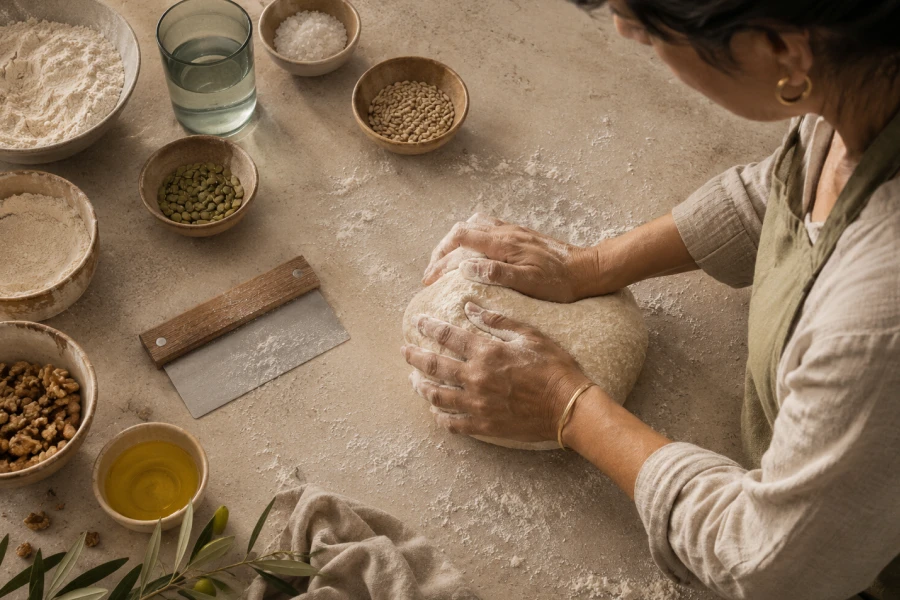
Baking bread at home feels easier when you understand what each stage is trying to accomplish. Mixing is not just mixing. Kneading develops strength. Rising creates flavor. Shaping controls structure. Baking finishes the transformation. Once those steps make sense, recipes stop feeling mysterious. You can follow directions with more confidence. You can also adjust when the dough behaves differently than expected. A clear home baker bread system helps you move from nervous guessing to calm observation.
Bread responds to small details. That makes it wonderfully teachable. A warmer room speeds rising. Wetter dough creates a different crumb. Longer resting can deepen flavor. Stronger kneading can improve shape. These details help you understand cause and effect. They also make every bake more interesting. You begin noticing changes before the oven even starts. Attention turns the process into learning. The reward is not only a loaf. It is the confidence to make another one.
Dough gives clues throughout the process. It may feel rough at first. Then it becomes smoother. It may resist shaping. After resting, it relaxes. These signals matter more than exact minutes. A recipe provides direction, but dough provides confirmation. Touch helps you decide when to keep kneading. Sight helps you judge the rise. Smell hints at fermentation. This practical awareness makes fresh bread techniques easier to remember and repeat.
Fresh bread changes the way simple food feels. A weeknight stew becomes richer. Eggs feel more satisfying. A salad turns into a full lunch. Even leftovers gain purpose when served with warm slices. This is why bread belongs in everyday cooking, not only special weekends. A handmade loaf gives you a flexible staple. It can be soft, crusty, sweet, savory, plain, or filled. One basic skill supports many meals.
Timing problems often come from temperature, not talent. Cold kitchens slow yeast. Warm kitchens speed everything up. If dough rises too slowly, move it to a warmer spot. If it rises too quickly, shape sooner. If baking gets delayed, refrigerate the dough. These fixes make bread more flexible. They also reduce pressure. You do not have to match perfect conditions. You only need a method that explains what to watch.
Creativity grows after the basic loaf feels familiar. Try a rustic round. Shape sandwich bread. Add cinnamon to breakfast loaves. Fold in cheese for dinner. Experiment with whole wheat flour slowly. Each variation should teach one new idea. That keeps progress manageable. It also prevents recipes from blurring together. A thoughtful artisan bread starter path lets you explore without losing the comfort of structure.
Reliability comes from repetition and notes. Write down the recipe. Record the room temperature. Notice the rise time. Save what worked. Adjust only one thing next time. This keeps learning clear. It also protects your confidence after an imperfect loaf. Bread making becomes a skill because you build memory through practice. The more you bake, the more the process feels natural. Eventually, flour, water, yeast, and salt begin to feel like possibility.
A practical bread routine also depends on the way you organize your space. Clear the counter before mixing. Set out measuring tools. Keep flour within reach. Prepare a clean towel or wrap before the first rise. These tiny preparations reduce interruptions. They also help you notice the dough more carefully. A calmer workspace can change the whole bake. You feel less rushed. The recipe feels less scattered. The loaf benefits from that attention.
Over time, you may begin choosing recipes based on the kind of eating week ahead. A sandwich loaf suits packed lunches. A rustic round suits soup. Rolls suit family dinners. Flatbreads work beautifully when time is tight. This kind of planning makes bread feel responsive. It fits the household instead of asking the household to adapt around it. That is where home baking becomes genuinely useful, not just pleasant.
Equipment can stay minimal while still supporting better results. A sturdy bowl, measuring cups, a baking sheet, and a sharp knife can carry many recipes. A kitchen scale helps when you want more precision. A thermometer can remove doubts about water temperature. A Dutch oven can improve crust, but it is not required for every loaf. Start with what you have. Add tools only when your baking habit proves they will genuinely help.
Most importantly, keep the goal realistic. One reliable recipe can teach more than ten unfinished experiments. When the process feels steady, you stay curious. That curiosity makes every loaf easier to understand, even when the result is not perfect.



Leave a comment